Evaluating the Cute Female Dragon 3D Printable Model
The realm of 3D printing offers a vast array of digital models, ranging from complex mechanical assemblies to artistic sculptures. Among these, the Cute Female Dragon has emerged as a popular choice for hobbyists and collectors alike. This specific model is characterized by its charming aesthetic, featuring soft features and a distinct cartoon style that emphasizes approachability over realism. For individuals researching 3D printable assets, understanding the nuances of this model—from its geometric design to its printing requirements—is essential for determining if it aligns with their current projects and skill levels.
The Cute Female Dragon is not merely a visual asset; it represents a specific category of 3D models designed for accessibility and aesthetic appeal. Unlike high-poly models intended for professional rendering or intricate miniature wargaming figures that demand advanced painting skills, this dragon focuses on rounded shapes and simplified details. The design philosophy prioritizes a "beautiful finish" even with standard consumer-grade printers. This makes it a compelling subject for evaluation, particularly for those who may be hesitant about the technical difficulties often associated with additive manufacturing.
Design Characteristics and Aesthetic Appeal
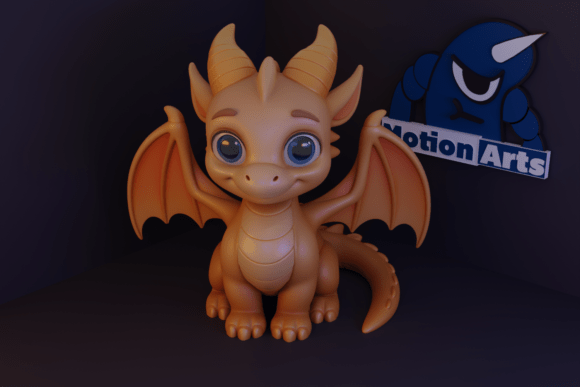
At the core of the Cute Female Dragon is its stylized appearance. The model utilizes simple, rounded geometry to create a silhouette that is instantly recognizable as a dragon while maintaining an undeniably adorable persona. In the context of 3D modeling, "cute" often translates to exaggerated proportions, such as larger heads relative to bodies, softer edges, and expressive features. These elements are deliberately engineered into the STL file to ensure the physical print captures the intended emotion.
The cartoon style serves a functional purpose beyond mere aesthetics. By reducing sharp angles and intricate overhangs, the designer minimizes the likelihood of printing failures. This is a critical consideration for users evaluating models based on reliability. The smooth curves facilitate better layer adhesion and reduce the visibility of layer lines, resulting in a higher quality surface finish without the need for extensive post-processing. For collectors looking to populate shelves with magical creatures, this model offers a cohesive look that blends well with other stylized figures.
Technical Requirements and Printing Considerations
When selecting a 3D model, technical specifications are just as important as visual design. The Cute Female Dragon is categorized as a beginner-level project. This classification is derived from its geometric simplicity and the manageable nature of its support structures. While the model does require supports—a common necessity for figures with extended limbs or tails—the complexity of removing these supports is significantly lower than that of more aggressive or dynamic dragon poses.
Users should anticipate the need for standard support generation within their slicing software. Because the shapes are rounded, supports generally attach to broader surfaces rather than delicate points, reducing the risk of damaging the model during removal. However, it is important to note that "support required" implies an additional step in the workflow. Beginners must be prepared to carefully prune these structures and potentially sand the contact points to achieve the promised smooth finish. The trade-off here is between ease of printing and the time invested in post-processing. While the print itself is robust, the cleanup phase remains a necessary part of the process.
The file format provided is STL, the industry standard for 3D printing. This ensures compatibility with virtually all slicing software and printer types, from FDM (Fused Deposition Modeling) to SLA (Stereolithography) machines. For FDM users, the rounded shapes allow for successful printing at moderate layer heights, balancing speed and detail. For resin printer users, the lack of fine, fragile details reduces the chance of breakage during the washing and curing stages.
Ideal Use Cases and Audience Fit
Determining whether the Cute Female Dragon is the right fit depends largely on the user's goals. This model is exceptionally well-suited for several specific scenarios:
- Entry-Level Practice: For those just starting in 3D printing, this model serves as an excellent benchmark. It tests the printer's ability to handle curves and supports without the high risk of failure associated with complex miniatures.
- Decorative Collections: Individuals curating a display of fantasy creatures will find this dragon adds a touch of whimsy. Its friendly demeanor makes it appropriate for diverse environments, including children's rooms or casual office spaces, where more menacing dragon depictions might feel out of place.
- Gift Creation: Due to its universal appeal and non-threatening design, printed copies make thoughtful handmade gifts. The ability to customize filament colors allows creators to personalize the dragon for specific recipients.
- Rapid Prototyping of Character Designs: Artists looking to visualize a character concept quickly can use this base model to understand volume and form before committing to a custom sculpt.
The emphasis on "personality" in the design means that even a single-color print can convey character. This is beneficial for users who may not possess advanced painting skills but still desire a visually engaging final product.
Limitations and Alternative Considerations
While the Cute Female Dragon offers many advantages, it is not the optimal choice for every situation. Users seeking hyper-realism or anatomical accuracy may find the cartoonish proportions unsatisfactory. The simplification of scales and textures, while helpful for printing, limits the level of detail available for weathering or realistic painting techniques. If the goal is to create a museum-quality replica of a mythical beast, a high-detail sculpt with intricate scale patterns would be a superior alternative.
Furthermore, gamers requiring models for tabletop role-playing games (TTRPGs) should consider the scale and pose. While adorable, the static or simple pose of a "cute" model may not convey the dynamic action required for combat scenarios in games like Dungeons & Dragons. In such cases, models specifically rigged for dynamic posing or designed with weapon integration might be more practical.
Another consideration is the requirement for supports. Although manageable, users with printers that struggle with support removal or those seeking a completely support-free experience might prefer models designed with clever orientation in mind to eliminate supports entirely. While the rounded shapes of this dragon mitigate risks, they do not eliminate the need for support material altogether.
Making the Decision
Selecting a 3D model is a balance between aesthetic desire and technical capability. The Cute Female Dragon stands out as a reliable option for those who prioritize a charming aesthetic and a forgiving printing process. It bridges the gap between artistic expression and technical feasibility, making it a strong candidate for beginners and intermediate users alike.
If your primary objective is to expand a collection with friendly, magical creatures while minimizing the frustration of failed prints, this model aligns perfectly with those goals. It offers a satisfying project lifecycle from download to display. However, if your requirements lean heavily towards extreme detail, realistic anatomy, or dynamic action poses, exploring more specialized libraries may yield better results. Ultimately, the value of the Cute Female Dragon lies in its ability to deliver a delightful physical object with a high probability of success, reinforcing the joy of creation that defines the 3D printing hobby.