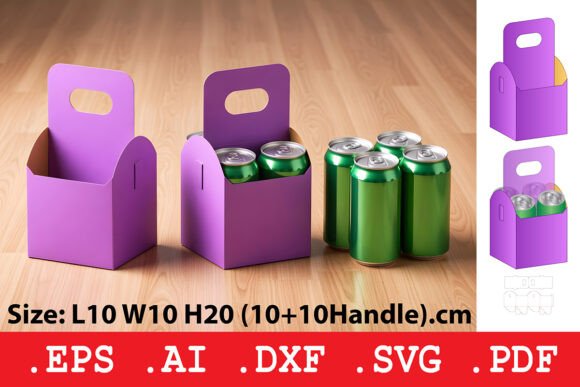
Handle 4-Pack Can Carrier: A Practical Guide to Portable Beverage Packaging
In the evolving landscape of retail and event hospitality, the presentation of a product is often just as critical as the product itself. For breweries, craft soda makers, and event organizers, the challenge lies not only in creating a refreshing beverage but also in ensuring it reaches the consumer safely, stylishly, and conveniently. This is where the Handle 4-Pack Can Carrier emerges as an essential solution. More than just a simple box, this packaging template represents a thoughtful intersection of structural engineering, user experience, and brand visibility.
Whether you are a small-batch brewer looking to elevate your takeaway game or a corporate planner organizing a summer festival, understanding the nuances of this carrier design can significantly impact your operational efficiency and customer satisfaction. This article explores the design philosophy, material specifications, and practical applications of the Handle 4-Pack Can Carrier, offering a comprehensive look at why this specific format has become a staple in modern beverage distribution.
The Anatomy of Efficient Design
At its core, the Handle 4-Pack Can Carrier is designed to solve a very specific logistical problem: how to transport four standard drinking cans securely while maintaining ease of access. The design features an open-top rectangular structure, which serves multiple functional purposes. Firstly, the open top allows for quick retrieval of the cans without the need to dismantle the packaging. Secondly, it provides immediate visual confirmation of the product inside, acting as a silent salesman on retail shelves or at market stalls.
The integrated carry handles are perhaps the most defining feature of this template. Unlike traditional six-pack rings or flimsy paper sleeves, these handles are structurally integrated into the side panels. This design choice distributes the weight of the loaded cans evenly across the carrier, reducing the likelihood of handle failure—a common pain point for consumers carrying heavy glass bottles or dense aluminum cans. The contoured side panels further enhance this stability by hugging the cans tightly, preventing them from shifting or clattering during transport. This secure fit is crucial for maintaining the integrity of the product, especially when navigating crowded events or uneven terrain.
Material Strength and Durability
A packaging design is only as good as the material it is printed on. For the Handle 4-Pack Can Carrier to perform its duty effectively, the choice of substrate is non-negotiable. The template is optimized for 300-350 gsm paper. This specific weight range provides the necessary rigidity to support the weight of four full cans without buckling or bending.
Using paper below this weight threshold may result in a carrier that feels flimsy and unreliable, potentially damaging the brand's reputation for quality. Conversely, using material significantly heavier than 350 gsm might make the carrier difficult to fold and assemble, increasing labor costs during production. The 300-350 gsm sweet spot ensures that the carrier is robust enough for daily use yet flexible enough for efficient manufacturing and assembly. This balance of strength and workability is what makes the template suitable for both high-volume industrial printing and smaller, artisanal batch productions.
Versatility Across Industries
While the primary association with the Handle 4-Pack Can Carrier is the craft beer industry, its utility extends far beyond brewing. The neutral, adaptable design makes it an excellent choice for a variety of sectors:
- Craft Breweries and Cideries: The standard use case. It allows breweries to sell mixed packs, seasonal releases, or limited-edition runs in a format that feels premium compared to plastic rings.
- Event Catering and Festivals: For outdoor events, durability is key. These carriers withstand the rigors of outdoor environments better than many alternative packaging types, making them ideal for beer gardens and music festivals.
- Retail Takeaway: Boutique soda shops and kombucha brewers can use these carriers to offer multi-packs that stand out on shelves, providing a tactile unboxing experience that plastic cannot match.
- Corporate Gifting: Companies often send beverage gifts to clients. A custom-branded can carrier offers a sophisticated and eco-friendly alternative to generic gift bags.
The adaptability of the design means that with the right graphic design, the same structural template can convey a rugged, industrial vibe for a stout beer or a clean, minimalist aesthetic for a sparkling water brand.
Digital Assets and Production Flexibility
One of the significant advantages of acquiring a professional template like the Handle 4-Pack Can Carrier is the versatility of the included file formats. Different stages of the production process require different types of digital files, and having a comprehensive package ensures smooth workflow from design to final cut.
- .AI (Adobe Illustrator): This is the original source file, essential for designers who need to make substantial changes to the layout, add custom die-lines, or adjust vector elements. It offers full customization capabilities.
- .EPS (Encapsulated PostScript): A standard vector format widely used in industrial printing. It ensures that logos and text remain crisp and scalable regardless of the print size, making it a safe choice for sending files to third-party printers.
- .SVG (Scalable Vector Graphics): Ideal for digital design and modern craft cutters. If you are using a desktop cutting machine for prototyping or small-batch production, the SVG format ensures precise cutting paths.
- .DXF (Drawing Exchange Format): Compatible with CNC machines and laser cutting hardware. This is crucial for manufacturers who rely on automated cutting systems to produce high volumes of carriers with millimeter precision.
- .PDF (Portable Document Format): A print-ready document that serves as a universal viewer. It allows stakeholders to review the design, check dimensions, and verify layout accuracy without needing specialized design software.
This multi-format approach removes technical barriers, allowing creators to focus on branding and marketing rather than troubleshooting file compatibility issues.
Evaluating Suitability for Your Project
Before committing to this packaging solution, it is important to evaluate whether it aligns with your specific needs. Consider the following factors:
Volume and Budget: While the template itself is a one-time investment, the cost of producing 300-350 gsm cardstock carriers can be higher than simple shrink-wrap or plastic rings. However, the perceived value added to the product often justifies the cost, allowing for a higher retail price point.
Assembly Time: Unlike pre-glued boxes, flat-pack carriers require assembly. If you are selling high volumes, consider the labor involved in folding and locking the tabs. Some businesses invest in automatic folding machines, while others incorporate assembly into their manual packing process. The design of the Handle 4-Pack Can Carrier is generally intuitive, minimizing assembly time, but it is still a factor to consider.
Environmental Goals: For brands prioritizing sustainability, this carrier is a strong choice. Made from paper, it is recyclable and biodegradable, unlike plastic alternatives. Highlighting this eco-friendly aspect can be a powerful marketing tool, appealing to environmentally conscious consumers.
Real-World Application Scenarios
To illustrate the practical value of the Handle 4-Pack Can Carrier, let us look at two distinct scenarios.
Scenario 1: The Local Brewery Launch
A local brewery is launching a new IPA. They want to create buzz and encourage customers to buy four-packs for home consumption. By using the Handle 4-Pack Can Carrier, they can print vibrant, eye-catching graphics directly onto the packaging. The sturdy handles allow customers to easily carry the pack from the taproom to their cars, and the open-top design lets the colorful can labels peek through, enhancing shelf appeal. The result is a cohesive brand experience that feels premium and thoughtful.
Scenario 2: The Outdoor Music Festival
An event organizer is setting up a beverage station at a muddy outdoor festival. Plastic rings are prone to breaking and littering the grounds. The Handle 4-Pack Can Carrier, made from rigid 350 gsm paper, holds up well against the elements. The integrated handles make it easy for attendees to carry their drinks while dancing or moving between stages. Furthermore, the paper material is easier to clean up and recycle post-event, aligning with the festival’s sustainability initiatives.
Conclusion
The Handle 4-Pack Can Carrier is more than just a container; it is a strategic tool for brand building and customer convenience. Its thoughtful design, characterized by integrated handles and contoured sides, addresses the practical needs of transport and storage while offering a canvas for creative expression. By utilizing high-quality 300-350 gsm paper and leveraging versatile digital file formats, businesses can produce packaging that is both durable and visually striking.
For anyone involved in the beverage industry, from startup founders to established manufacturers, adopting this packaging solution can enhance product presentation, improve customer satisfaction, and support sustainability goals. As consumer expectations continue to rise, investing in high-quality, functional packaging like the Handle 4-Pack Can Carrier is a step toward delivering a superior overall product experience.